Redesigning the First Aid Section of the "Ole valmis!" Crisis Preparedness App
2024 | ux/ui
The app "Ole valmis!" created by Naiskodukaitse (Women's voluntary defence organisation) has thus far been marketed through crisis preparedness topics, but unfortunately, this is an emotionally difficult area. During the research, we found that people are not preparing for crisis because they feel that by taking action they are reassuring themselvesthat a major crisis (such as war) is a real possibility and a probable threat.
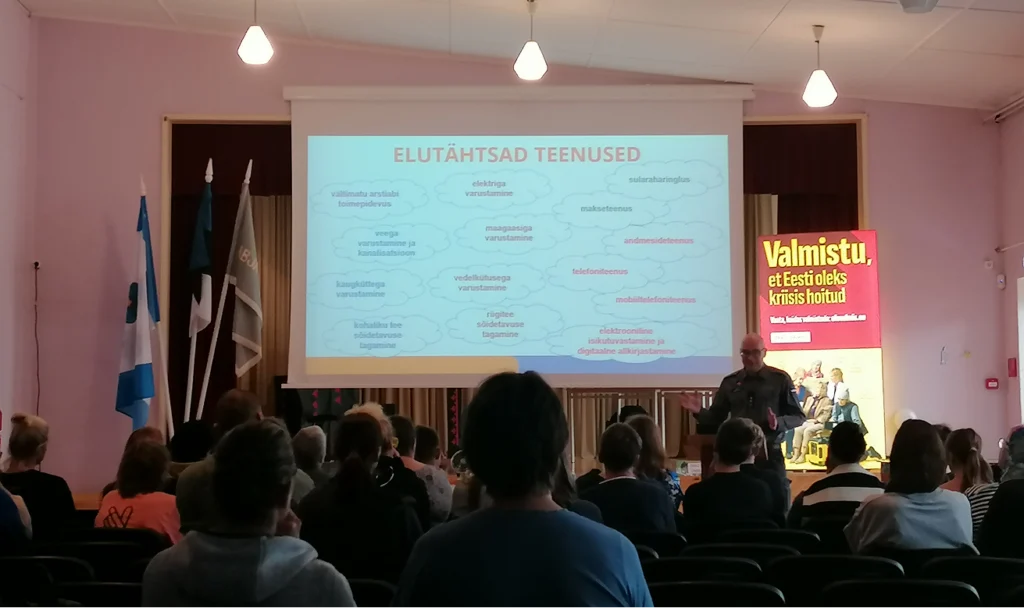
As a solution, I created a way guide people to crisis topics more smoothly, so that the first contact with the app would be calmer and would not create negative associations.
Result: Collaboration with app developers to actually put the idea into action
Team
Solution:
Laura Sööt
Research:
Aries Puusepp
Johannes Adrik
Katriin Saulus
Laura Sööt
Paula Maria Mengel
My Role:
Research – desk research, interviews, observation, introspection
UX and UI
Illustrations
Stage
Problem
Naiskodukaitse's development specialist approached us with the problem that initially sounded quite simple: “The "Ole valmis!" app doesn’t attract the attention of young adults well.”
The initial target group was therefore 20-25 year olds living in Estonia.
More About the Process
Desk Research
We set out to investigate how the topics of crisis preparedness and awareness have been covered in Estonia and what reactions different solutions have evoked in people. We focused on war and evacuation.
We quickly noticed that the topic is talked about a lot and campaigns related to it are frequent. However, we noticed that the media reacts to these as threats from the state. – if people are being directed to prepare for a threat that much, it must mean that the threat is likely and close, right?
Anxiety, fear and depression
We created an interview plan that focused on emotions related to crisis preparedness, sense of danger, and attitudes toward crisis topics.
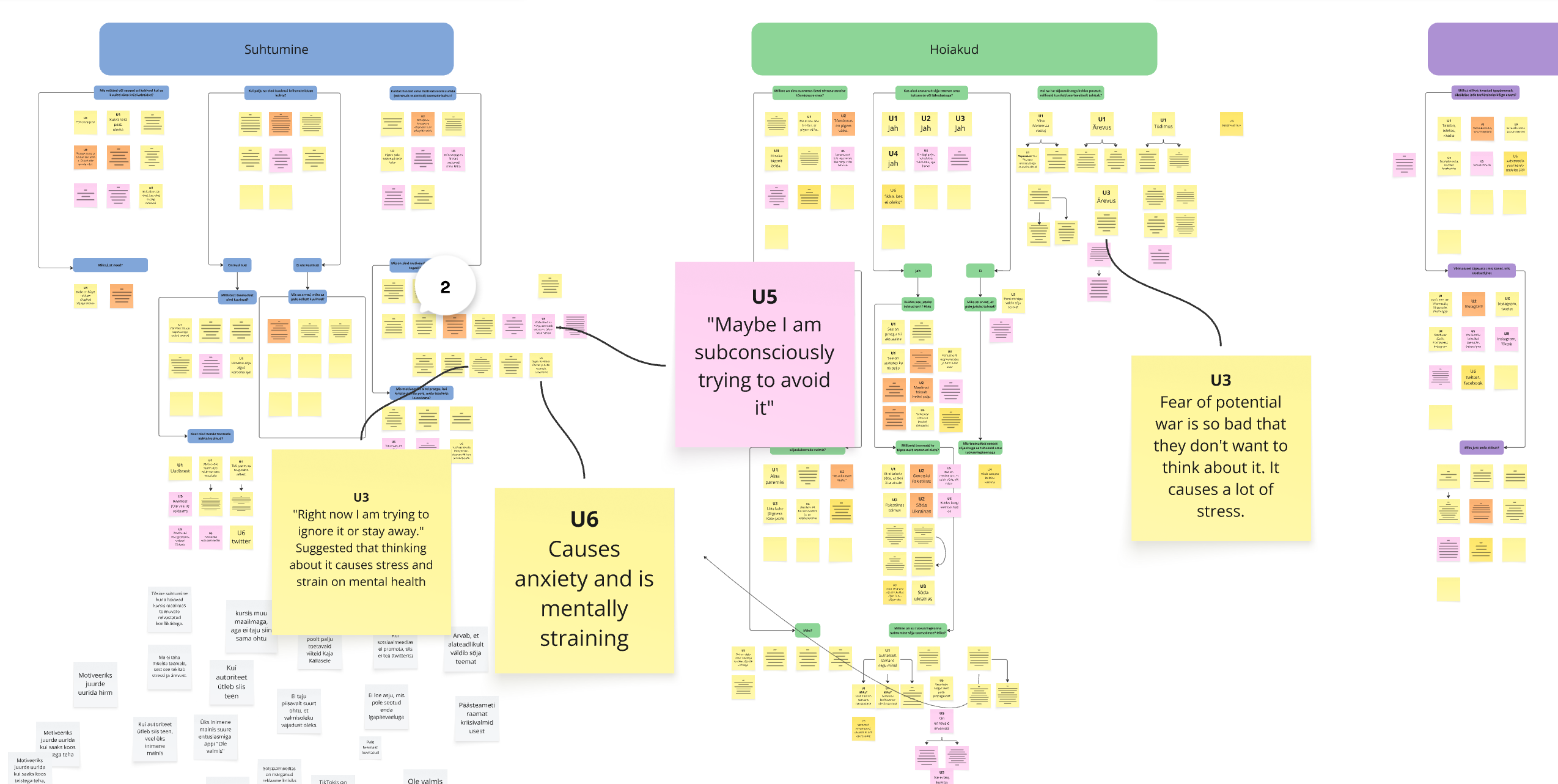
During ten hour-long interviews, we delved into the ideas and connections behind the interviewees' feelings and explored their current crisis preparedness and knowledge of the topic.
Although one might expect that crisis preparation would increase the sense of security – as through that the preparer is increasingly more protected from potential danger – the most mentioned feelings were anxiety, fear and depression.
The term "crisis fatigue" was also mentioned repeatedly, meaning that there is no desire to further research the topic because it has been overwhelmingly dominant in the media in recent years, and it is easier to live in the moment and enjoy peace while it lasts.
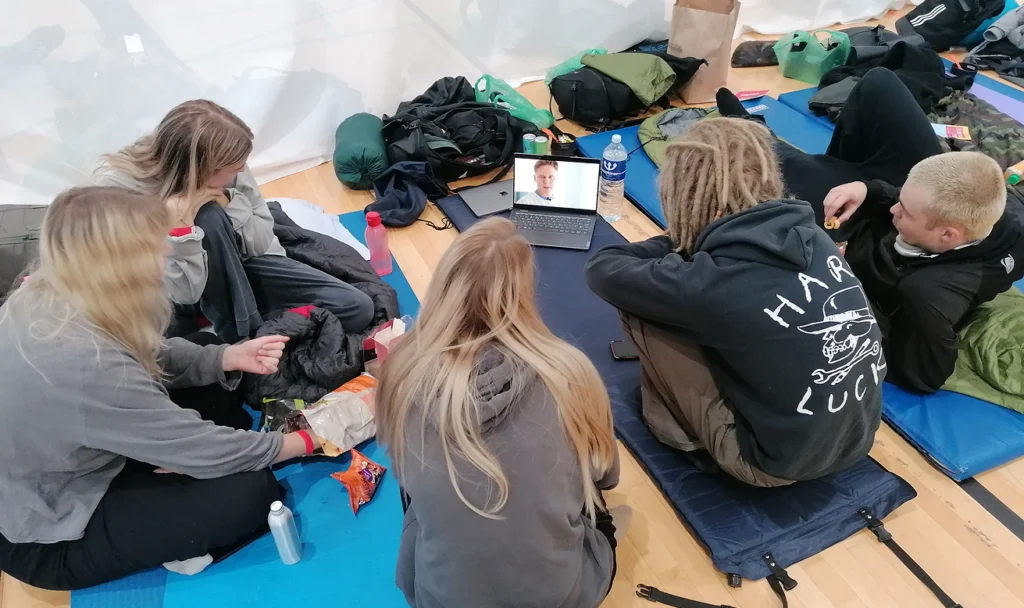
As the final part of the research, we participated in a two-day evacuation rescue exercise, Lõuna Sild 2024. There, we aimed primarily at introspection to analyse what feelings we might experience during a wartime evacuation. Second, we planned to conduct quick interviews with other participants to find out why the participating young adults had decided to go there and what their experience had been so far.
However, the exercise turned out to be much more comfortable than expected, so the crisis simulation did not lead to any major discoveries. However, the workshops were very useful - I quickly got a good overview of stockpiling, evacuation and many other things needed to manage during a crisis. In addition, I gained useful insight into how crisis topics are currently taught.
I'll solve... stockpiling?
The work continued individually and at this point it was time to start looking for a solution. But for what exactly?
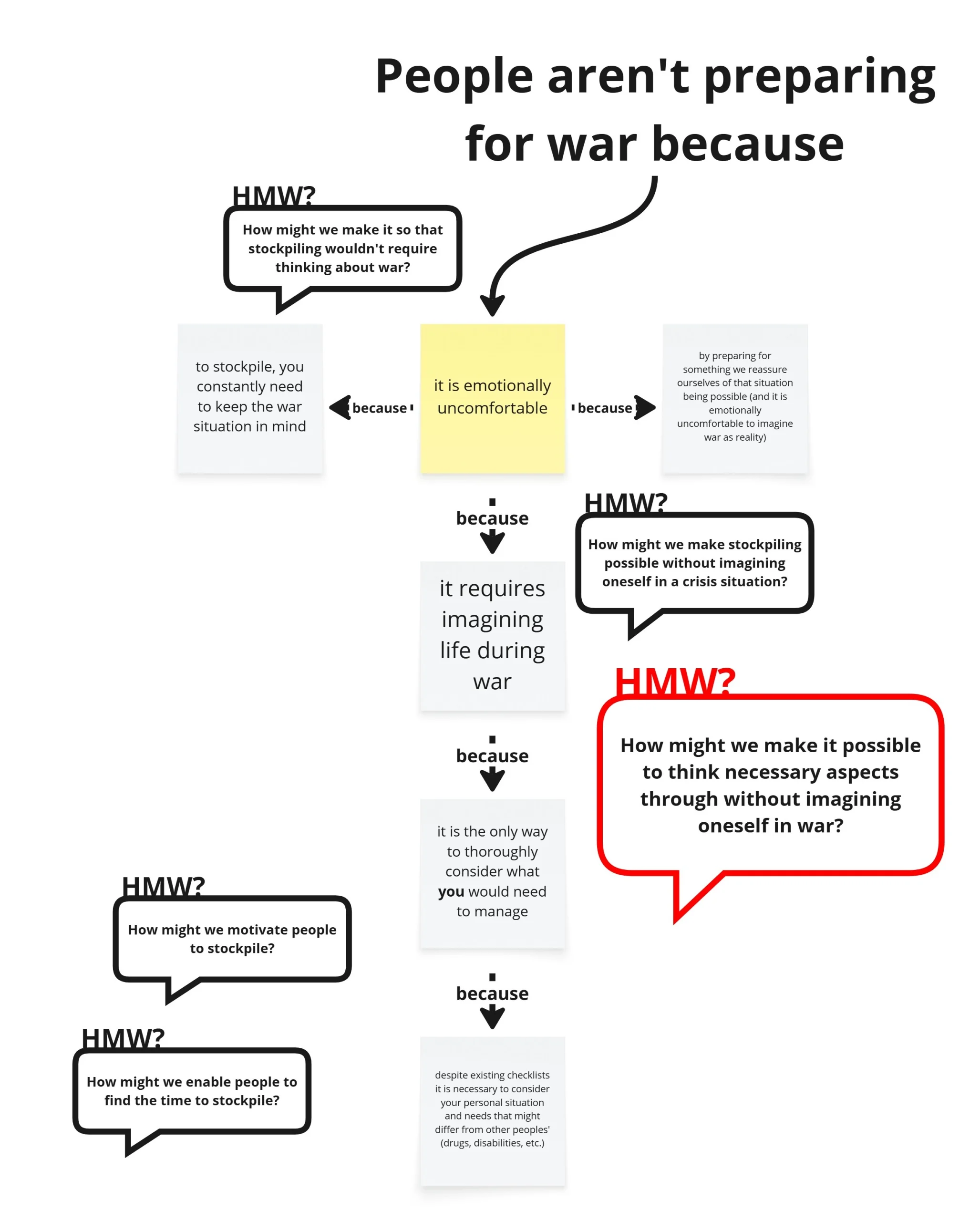
I started by dissecting the subtopic of stockpiling in the app's sections, because I found it to be the most direct and surefire way to prepare for something as unpredictable as war. While working through different ideas, I kept coming back to the same question: "how do you direct people to stockpile without making them feel in danger?"
When we asked interviewees if they had prepared for a crisis (and as a follow-up question: “why not?”), we repeatedly heard that collecting physical objects in your room for a war would act as a constant visual reminder of the potential threat and would deepen the fear of war. As I pondered my question, I finally realized that you can’t prepare for anything without mentally putting yourself in that situation, and in the case of war, imagining yourself in a war situation increases fear.
I started looking for a way to direct users to the app without causing anxiety. I looked at the topics listed on the “Ole valmis!” homepage and realised that there was just one topic that doesn’t instantly associate with major national crises: first aid.
First aid is a topic that is generally understood to be relevant in everyday life, and acquiring knowledge about it is more related to self-confidence and a sense of security.
I decided to redesign the “Ole valmis!” app's first aid section to be the logical starting point for new users. I initially outlined a user journey in which the app would be integrated into first aid training.
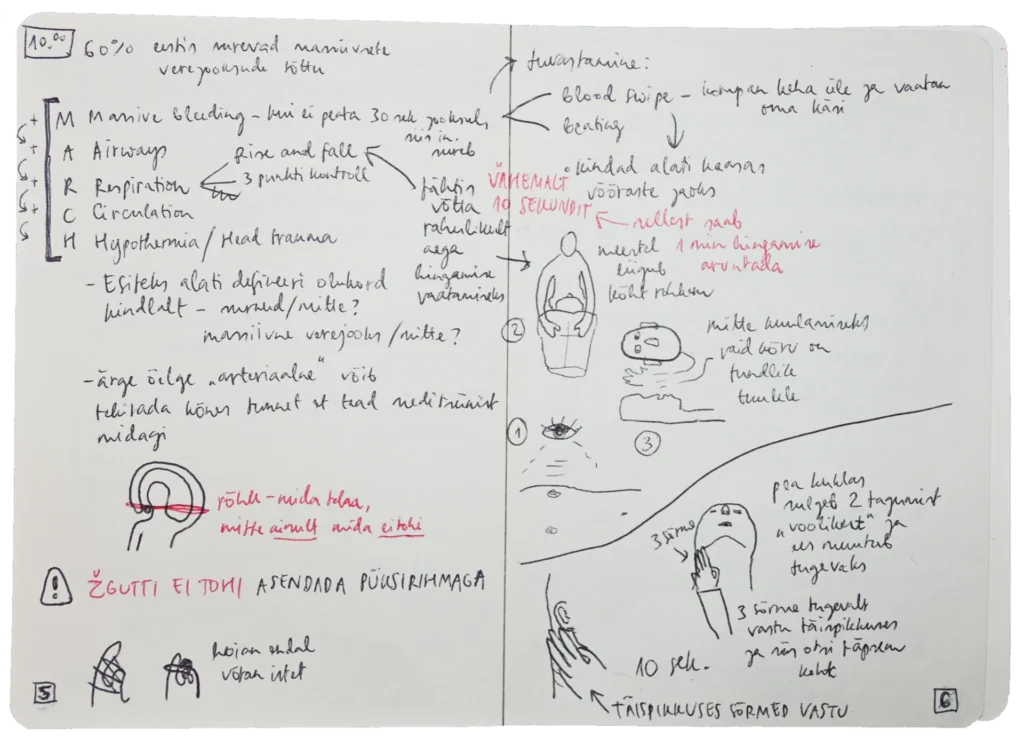
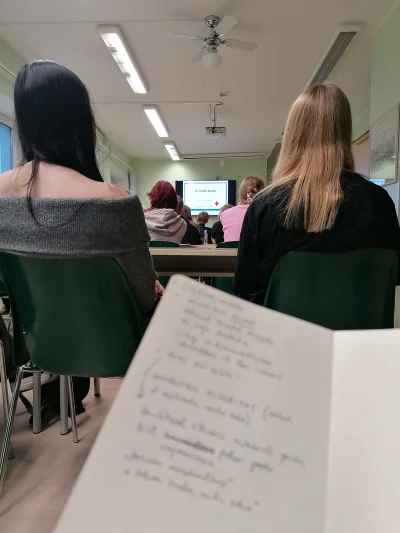
To validate this idea, I went to observe a 16-hour first aid training course at the Estonian Red Cross. I wrote down everything from the first aid theory to how the trainer phrased or demonstrated something and how the trainees reacted to get a better overview of what type of information people receive the most efficiently.
As a result of my observation, I realized that the classic training model works well and there is no need to change it. However, I found two new ways to link the app to first aid training:
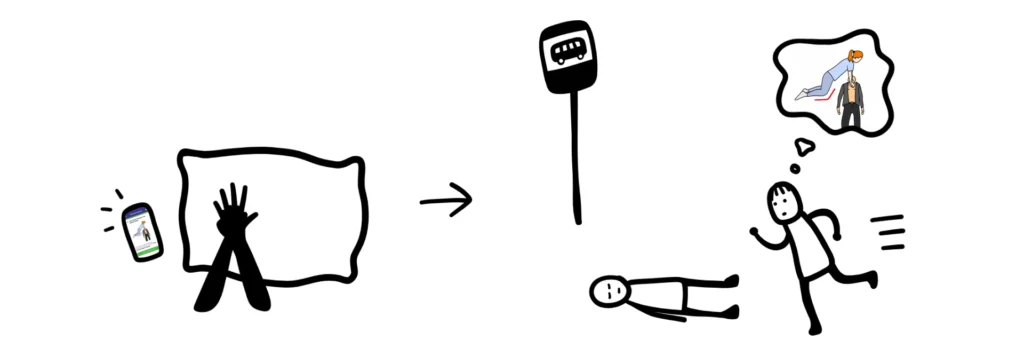
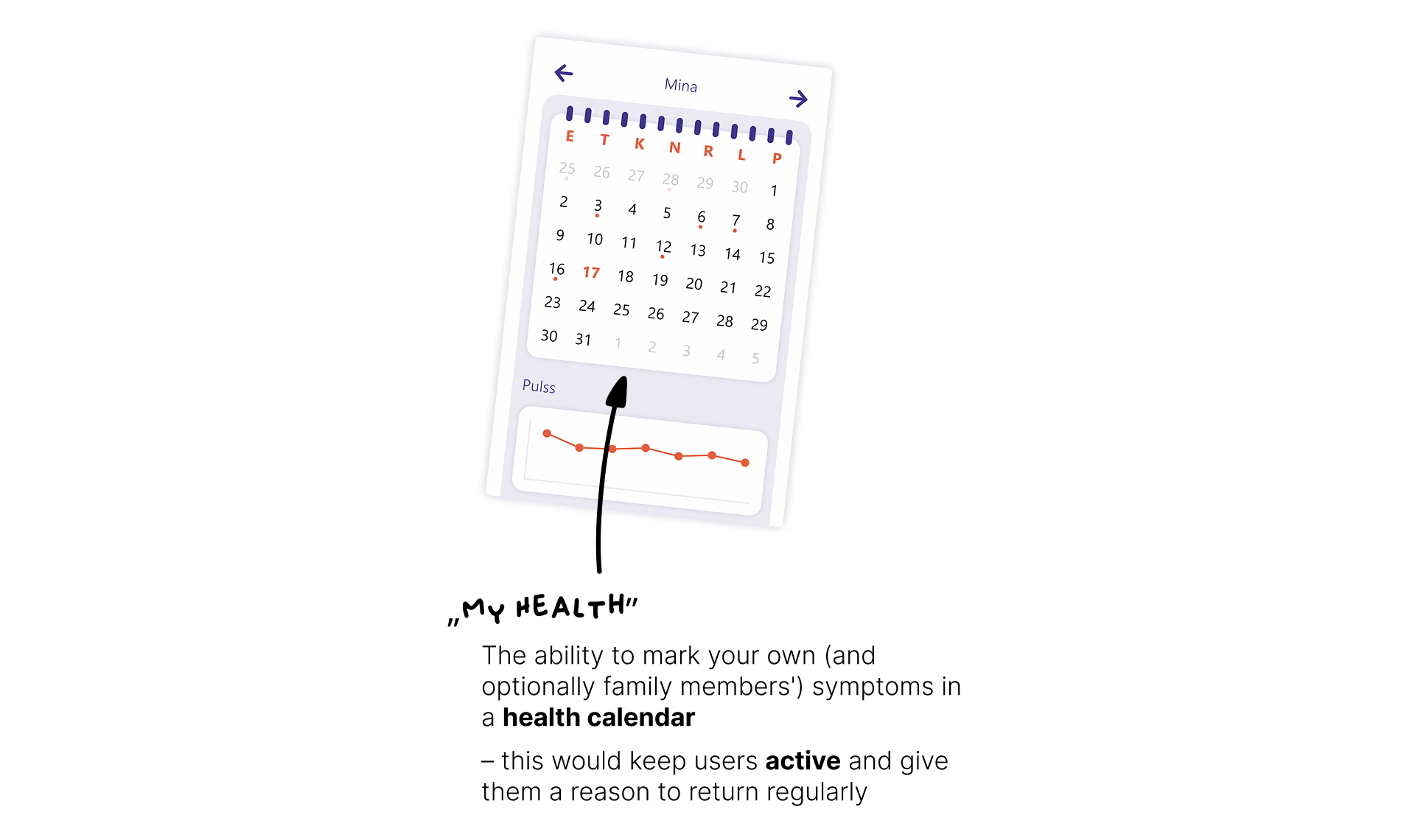
During the training, it was repeatedly emphasised that this knowledge must be regularly revised independently and that in addition to formal training, workplaces could also practice on a mannequin, for example at work parties.
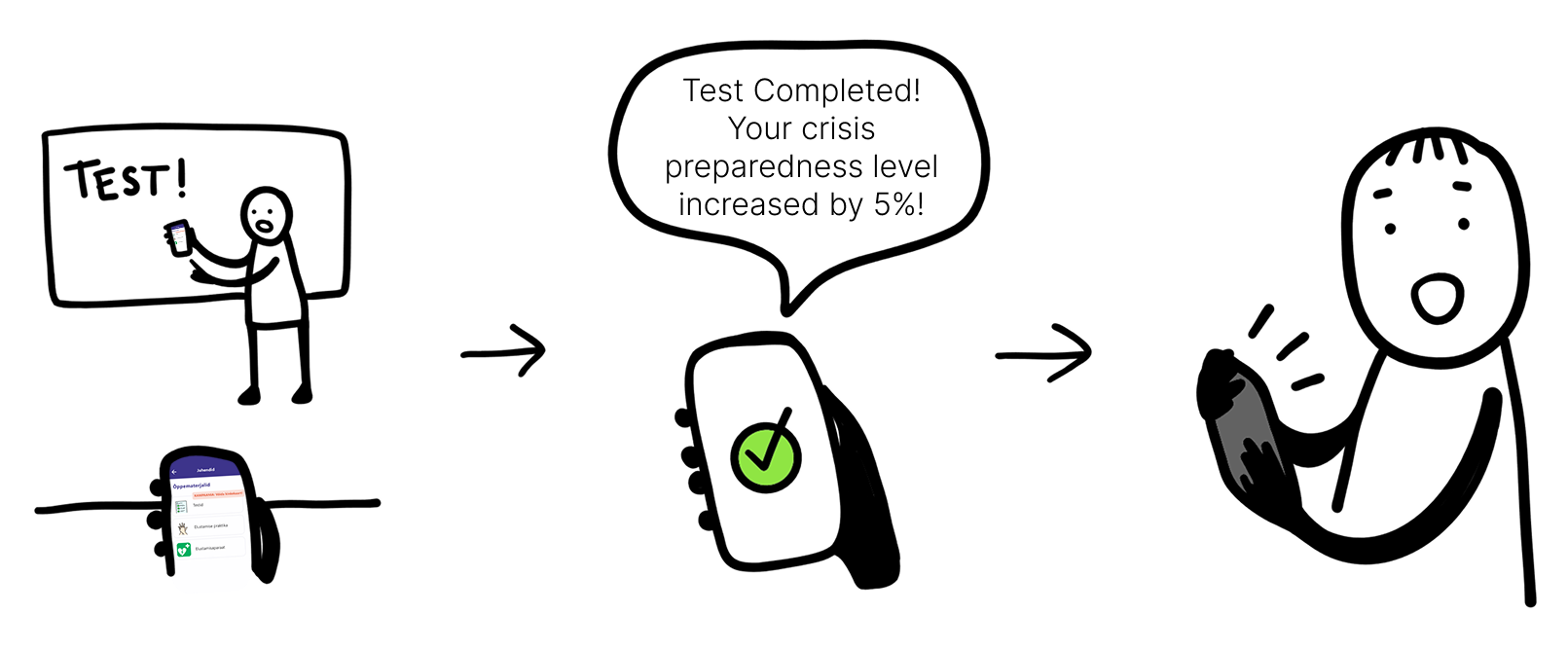
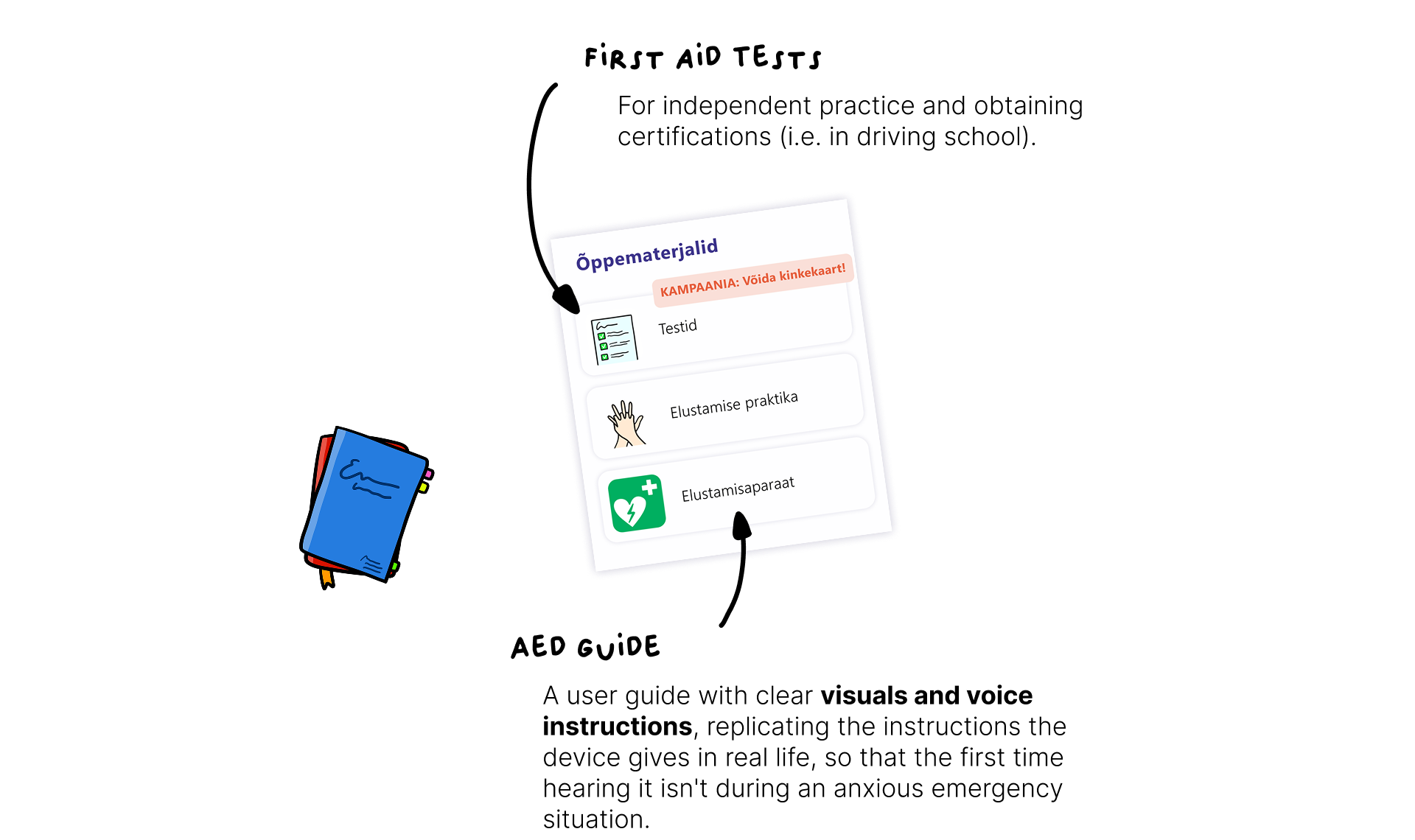
At the end of the training, there was a written test printed on five A4 pages.
Solution
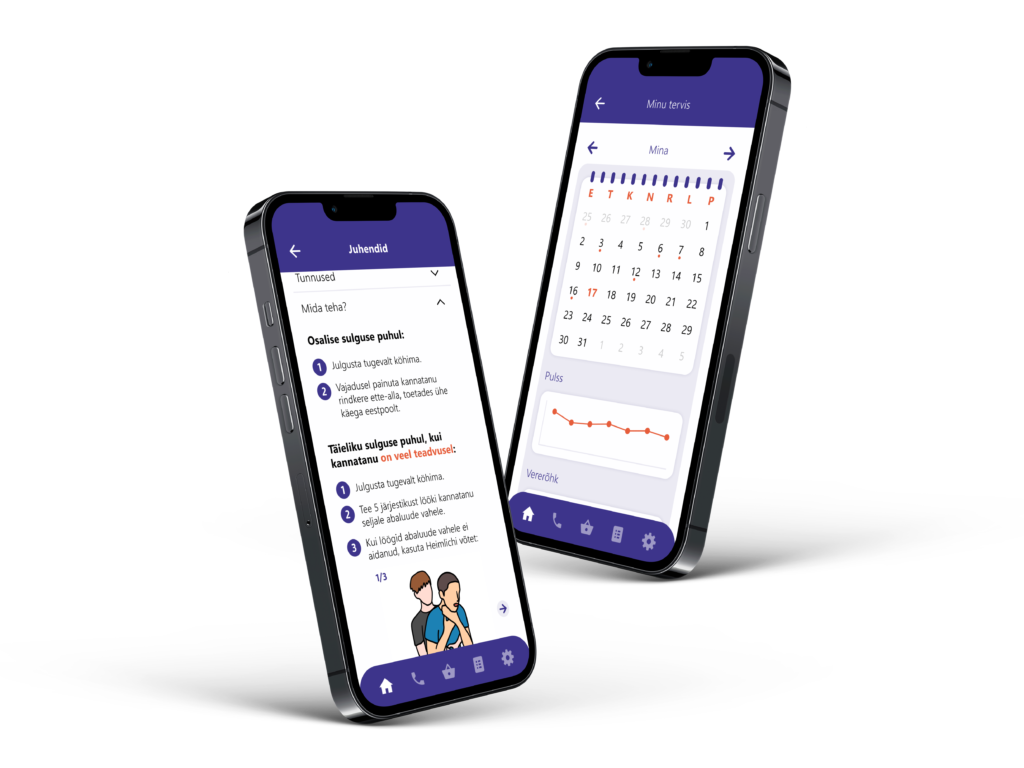
As a solution, I expanded the first aid section of the "Ole valmis!" app in such a way that the new features would bring more users to the app.
When being introduced to the app through the first aid topic, the first contact with it doesn't associate with a sense of worry, as can happen when starting with crisis topics.
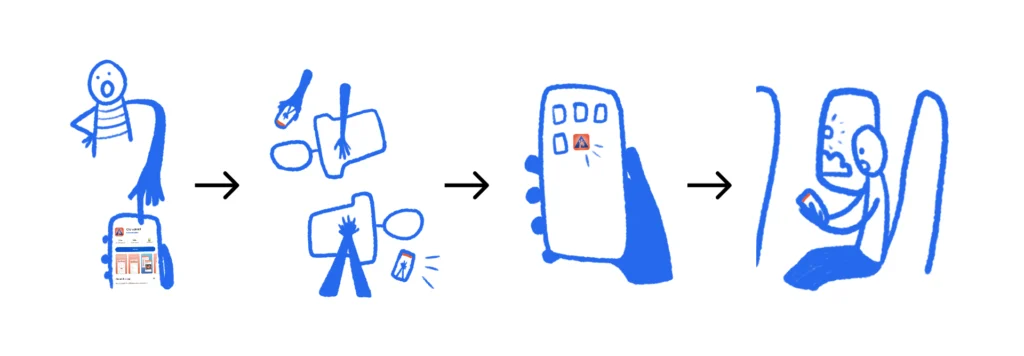
One possible user journey would lead users to the app through first aid tests found in the app, which the user must solve to complete the training. The tests could then seamlessly guide the user to explore other topics.
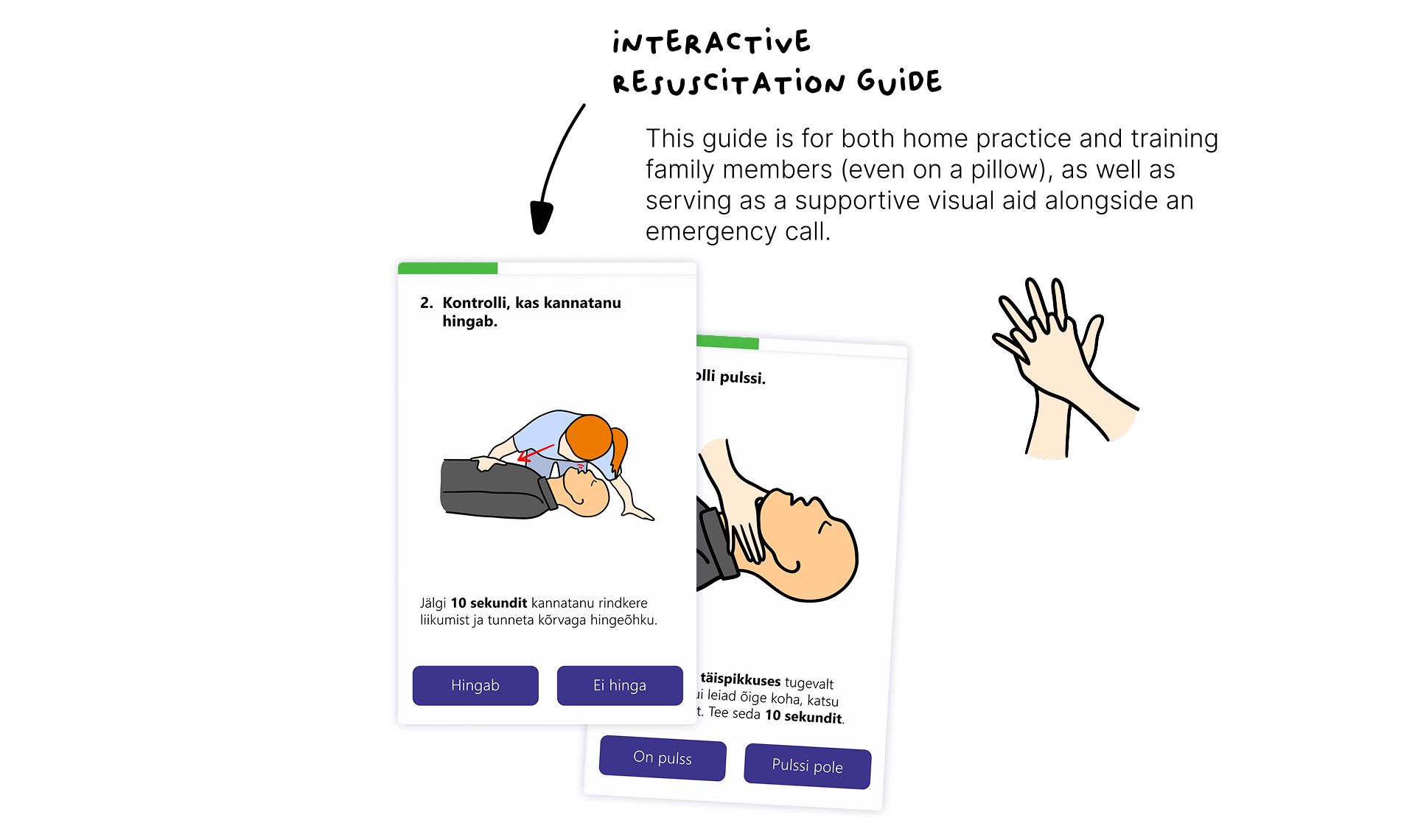
In training courses and schools, the application could be marketed through its other new features – for example, suggesting the independent revision of first aid techniques with the help of the app's interactive instructions.
Learning first aid is also an important part of crisis preparedness, and as a result of the innovations, there would be more people in Estonia who are confident in first aid and would not leave anyone in trouble in case of an emergency.
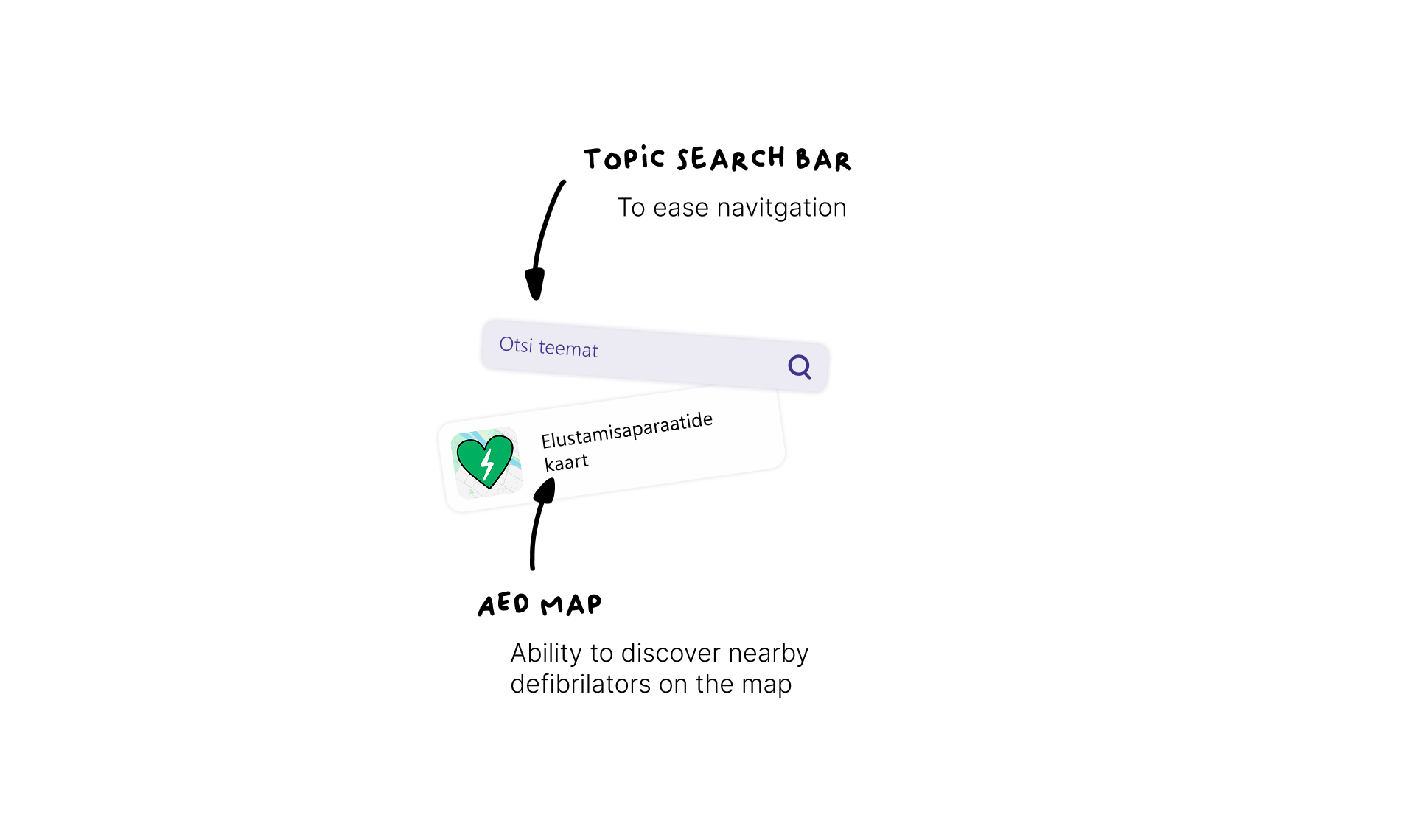
I Proposed the Following New In-App Features:
About the user interface
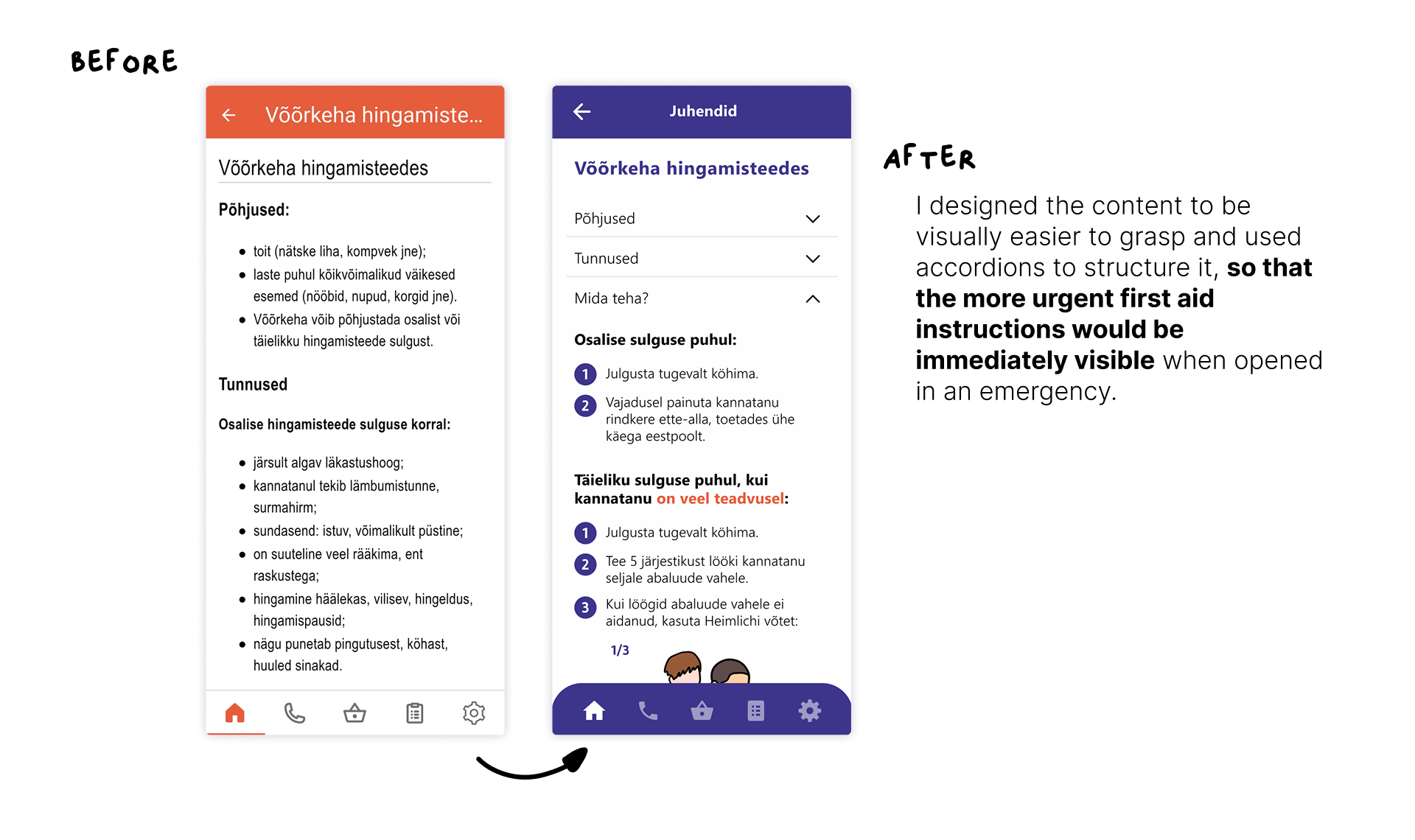
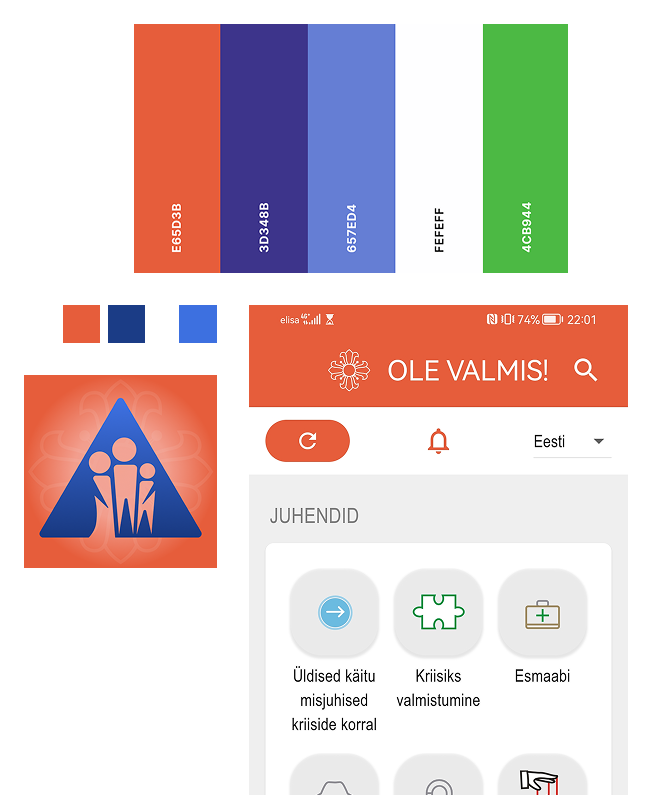
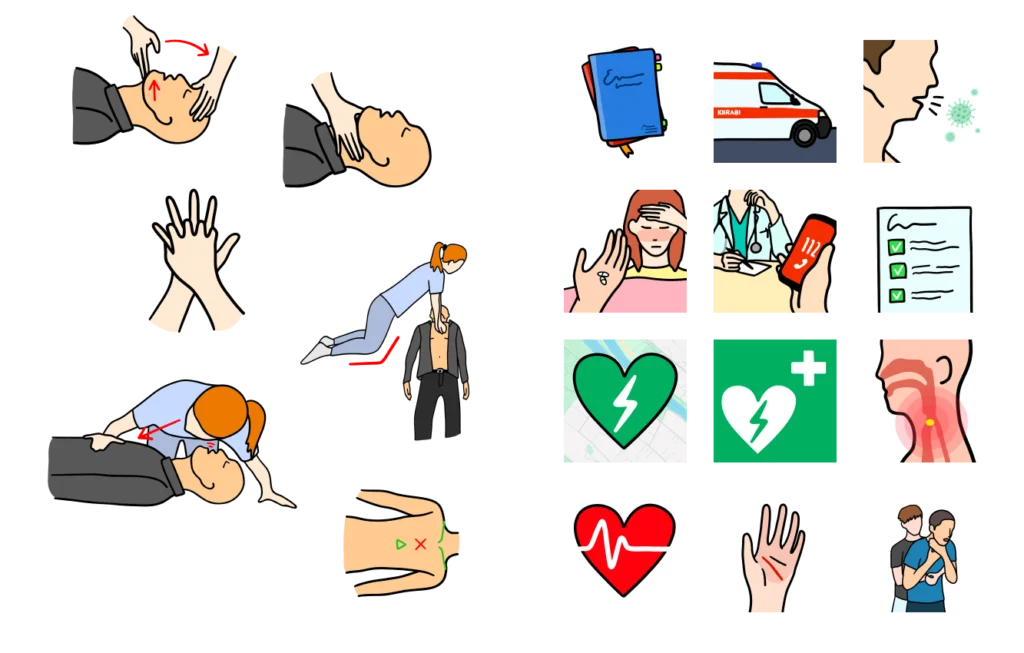
In the visual identity, I kept the app's primary colors – orange and blue, inspired by the symbol of evacuation sites – but I mainly used blue to make the color scheme more calming. I gave examples of clearer content organization and created colorful, yet simple illustrations that would make the large amount of information easier to understand.
When creating the illustrations, I focused on making them as unambiguous as possible. For example, I noticed during the first aid training that when learning CPR, people understood the hand position with intertwined fingers the fastest, so that is how I depicted it in my instructions as well.